ZTL — the Zona a Traffico Limitato (your #1 enemy)
A ZTL (Zona a Traffico Limitato) is a camera-enforced limited-traffic zone covering the historic centre of most Italian cities — Genoa, Alba, Bologna, Reggio Emilia, and basically every town pretty enough that you'd want to drive through it. Only residents, permit-holders, taxis and hotel-registered cars may enter during posted hours. There's no officer at the gate — just a camera (a 'varco') that photographs every plate, 24/7. Your sat-nav doesn't always know or care about ZTL boundaries and will route you straight through one. The bill is a slow ambush: the camera shoots your plate on day 0, the municipality sends the fine (verbale) to the rental company at ~day 30–60, and the rental company charges your card the fine PLUS an admin fee (commonly €25–60 per fine), which you see 60–120 days later. The brutal multiplier: EACH gate is a SEPARATE fine of roughly €80–100, so one confused loop in-and-out of a centre can be several fines plus several admin fees. A charge landing months after you've flown home is normal, not a scam — foreign-plate authorities have up to ~360 days to notify, and paying within ~5 days of the official notice usually knocks ~30% off (the rental admin fee, though, is separate and non-refundable). On your route, Genoa's centre and Alba have active ZTLs, and Portofino is effectively a permanent ZTL. The only winning move is not to enter. If the street looks narrow enough that a grandmother could cross it carrying groceries and judging you, it's probably a ZTL — don't.
- ✓Spot the sign: a round red-bordered white sign reading 'Zona a Traffico Limitato', often with an overhead display — 'Varco attivo' (red = closed, you WILL be fined) vs 'Varco non attivo' (green = temporarily open, rare). When in doubt, treat it as active.
- ✓Park outside the centre in a parcheggio or garage and walk in — it also sidesteps the ZTL trap entirely.
- ✓If your hotel is inside a ZTL, call ahead and give them your plate — hotels can register guests for temporary authorised access. Confirm before you arrive.
- ✓Each gate is a separate fine — driving in, realising, and driving back out can rack up multiple penalties.
- ✓A fine arriving months later is normal for foreign plates — pay within ~5 days of the notice for ~30% off; the rental admin fee on top is non-refundable.
Sources (5) ›
Autostrada — toll-lane traps, lane culture & the Tutor
Tolls work the way you'd expect — grab a ticket at the casello, pay on exit by card or cash — with one Italy-specific trap at the booth: the lane colours. White/grey lanes take cash + card, blue 'Carte' lanes are card-only, and yellow 'Telepass / Tt' lanes are electronic-only for Italian transponder subscribers. Stray into a yellow lane without the device and you're stuck at a barrier that won't lift, conducting a chorus of horns behind you (if it happens: don't reverse, hit the assistenza button, take the issued ticket, pay later). Lane culture is real and policed more by peer pressure than police: the left lane is strictly for overtaking, and a headlight flash from behind is information — 'I'm faster, move over' — not aggression; just drift right and let it pass. Which brings us to the apparition. Every so often something low, red and unmistakably Italian appears in your mirror as a distant dot and is a distant dot ahead of you about a second later — a Ferrari, a Lamborghini, a Maserati, or simply a man late for an espresso. Admire it, hold your line, wave it through. The one thing the speed merchants can't outrun: the cameras here are average-speed 'Tutor' systems that clock your average over a 10–25 km stretch, so braking at the gantry is pointless — and one sits on the A15 Parma–La Spezia (around Berceto), the road toward the coast. The Tutor does the maths on every plate with the same accountant's patience, entirely unmoved by how beautiful the car overtaking you is. Break the long stretches at an Autogrill; the espresso is unironically good.
- ✓Yellow 'Telepass / Tt' lanes are electronic-only — never enter one without the transponder; if you do, don't reverse, press assistenza, take the ticket and pay later.
- ✓Left lane is for overtaking only; a headlight flash from behind means 'move over', not road rage.
- ✓If something red and exotic fills your mirror then vanishes ahead, hold your lane and let it go — it's gambling with the Tutor, not you.
- ✓Tutor cameras average your speed over a long stretch (one's on the A15 toward La Spezia), so braking at the gantry does nothing.
Sources (5) ›
Mountain driving — Langhe hairpins & the Aosta Alps
The Langhe (Barolo wine hills) and the Aosta Valley are the best driving on the trip, and they run on local etiquette more than signage. The big one is the honk: a quick toot before a blind curve isn't rudeness, it's 'I'm here' to whatever's coming the other way, and locals do it constantly — join in. On steep single-track, the vehicle going UPHILL has right of way, so if you're descending you're the one expected to find a pull-in (piazzola) and wait. And at some point you'll watch a local overtake three cars and a tractor on a blind uphill bend, indicating with nothing but serene confidence and a complete absence of rearward glances. Witness it, admire the artistry, and do NOT imitate it — they've driven this exact road since before they could walk, the oncoming Panda is their cousin, and your insurance does not share their faith. Two genuinely-Italian practicalities worth one line each: don't run the tank low on a Sunday in the hills, because inland stations shut for lunch (~12:30–15:30) and often all Sunday, and their self-service terminals happily reject foreign cards; and if you're dipping into France over Mont Blanc, clear the cross-border bit with the rental company in advance (un-authorised foreign travel can void the insurance) and budget the Mont Blanc Tunnel toll (~€55 one-way / €69 return). Late June is mostly glorious, but afternoon thunderstorms turn a hairpin into a different animal, and high Aosta passes can still be closed early-season — check before committing.
- ✓Honk a short toot before blind curves — it's the expected courtesy, not anger.
- ✓Uphill traffic has right of way on single-track climbs; if descending, find a pull-in (piazzola) and wait.
- ✓You'll see locals overtake into blind hairpins on pure faith — enjoy it as theatre, never imitate it.
- ✓Don't run low on fuel on a Sunday in the hills — inland pumps shut for lunch/Sundays and may reject foreign cards.
- ✓For the France/Mont Blanc dip, clear cross-border use with the rental in advance; the tunnel toll is ~€55 one-way / €69 return.
- ✓Check high passes are open and watch for afternoon storms before heading up toward Mont Blanc.
Sources (4) ›
The coast — Cinque Terre, Portofino, Portovenere
The counterintuitive truth of the Ligurian coast: the car is the worst way to see the best parts. The pretty villages are car-hostile by design, parking is scarce and brutal, and trains/ferries are faster, cheaper and more scenic. Cinque Terre's five villages are effectively closed to non-resident cars; parking is in external lots above the villages at roughly €20–35/car/day (Riomaggiore ~€35, Monterosso/Manarola ~€25, Corniglia/Vernazza ~€20) — instead, base in La Spezia or Levanto and take the frequent Cinque Terre Express train. Portovenere has no train; parking is zone-based and seasonal (high season ~€2–3/hour, the big Golfo lot toward Le Grazie ~€2/hr, max ~€10/day) — or park in La Spezia and take the ~30-min bus, or arrive by ferry. Portofino is a permanent ZTL with exactly one paid covered car park in Piazza della Libertà at ~€5.50–7/hour (~€51/24h) — the civilised move is to park in Santa Margherita Ligure and reach Portofino by bus, ferry, or the coastal walk; the ferry approach is the prettiest anyway.
- ✓Cinque Terre: base in La Spezia/Levanto and use the Cinque Terre Express train — don't drive into the villages.
- ✓Portovenere: park at the Golfo lot (max ~€10/day) or leave the car in La Spezia and take the bus/ferry.
- ✓Portofino: park in Santa Margherita Ligure (cheaper, sometimes free on Via Favale/Via Garibotti) and arrive by ferry or bus — the single in-town garage is ~€5.50–7/hour.
- ✓Treat coastal village parking as a last resort; ferries and trains are faster, cheaper and far more scenic.
Sources (5) ›
Road manners & culture — the part worth learning
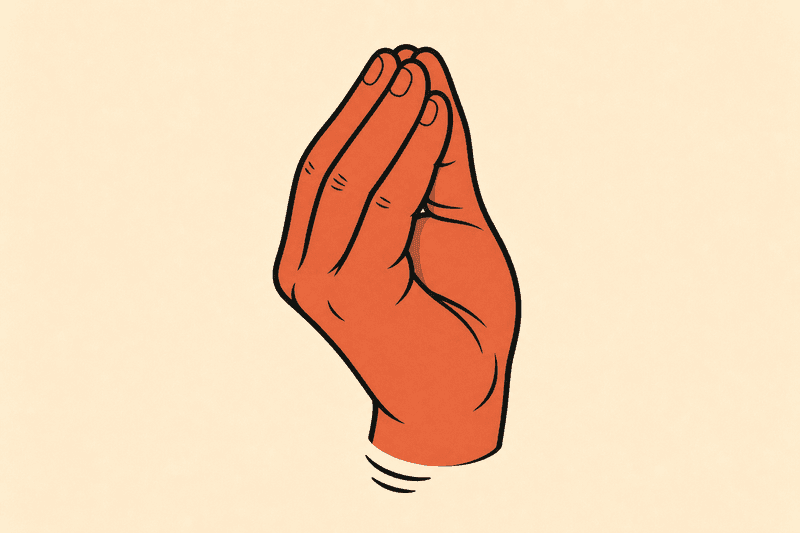
This is the part worth internalising, because Italian driving is a social art. Start with the national relationship with the rear-view mirror, which is famously, almost spiritually, distant: the local style commits to a manoeuvre with the serene faith of someone who has never once been let down by the universe — the lane change simply begins, no backward glance required, and the surrounding traffic is trusted to rearrange itself accordingly. It usually does. It's lovely to watch, and it means YOU do the looking for both of you — especially for scooters and motorbikes, which filter everywhere, between lanes, up the inside, through gaps you'd swear were too small. They will appear; they always appear. The horn is a language: a short beep can mean hello, 'I'm here', 'the light's green', or 'nonna, please' — it's rarely real anger. Gestures are the subtitles and the shouting out the window is the soundtrack: animated, operatic, and almost never actually hostile. Someone may lean out and deliver a full passionate monologue at you, both hands briefly off the wheel for emphasis, and mean roughly 'mind how you go, friend' — don't escalate; a calm wave defuses everything and the moment passes like weather. The rule that ties it all together: be decisive. Hesitation confuses everyone far more than a committed, slightly-wrong move. Aperitivo hour (~18:00–20:00) clogs the towns as everyone converges on a Spritz, so build in buffer time, pick your lane, commit, and smile.
- ✓Nobody checks mirrors but you — the locals change lanes on faith, so do the looking, especially for filtering scooters.
- ✓Treat the horn as communication, not aggression; an occasional friendly beep back is fine.
- ✓Shouting and big gestures out the window are theatre, not threats — answer with a calm wave, never an escalation.
- ✓Drive decisively — committed-but-slightly-wrong beats hesitant.
- ✓Add buffer time around aperitivo hour (~18:00–20:00) when towns clog.